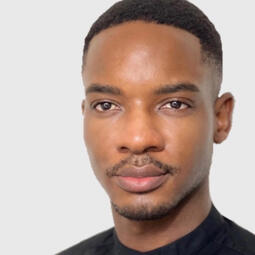
Artist
Read Biography
John-Paul Anderson
I help professionals find freedom through rule-breaking art. My work is a quiet rebellion—intuitive, expressive, and grounded in values like fairness, honesty, and emotional clarity. I believe you can live a life of integrity and still enjoy beauty, abundance, and ease. Every painting I make is a reminder that freedom doesn’t have to be loud—it just has to be true. I welcome collectors who believe in feeling deeply, thinking boldly, and building a life that feels as good as it looks.
Series IV - To Just Be
Please enjoy the waiting process
Series III - Uninterrupted vision.Kingston, Cape Cod, and beyond — 2025
Series III is about instinct. This body of work documents the artist’s willingness to follow a feeling—even when the meaning hasn’t yet revealed itself.Here, visions arrive suddenly. Some are born from memories; others emerge without explanation.Even the materials reflect the spirit of this series. Many works are on sketch paper or repurposed canvases—quick, instinctual, without pretense. The art is not trying to be polished. It’s trying to be honest.At the heart of the collection is John—a tender tribute to a chosen father figure. A man who taught the artist to fish, mentored him through a corporate exit, and offered the kind of unwavering support that shaped who he is becoming.Series III is what happens when you stop asking, what does this mean?—and instead ask, what is showing up for me?It’s a series about trusting that the hand knows.
That the vision is enough.
That sometimes, being interrupted is the point.
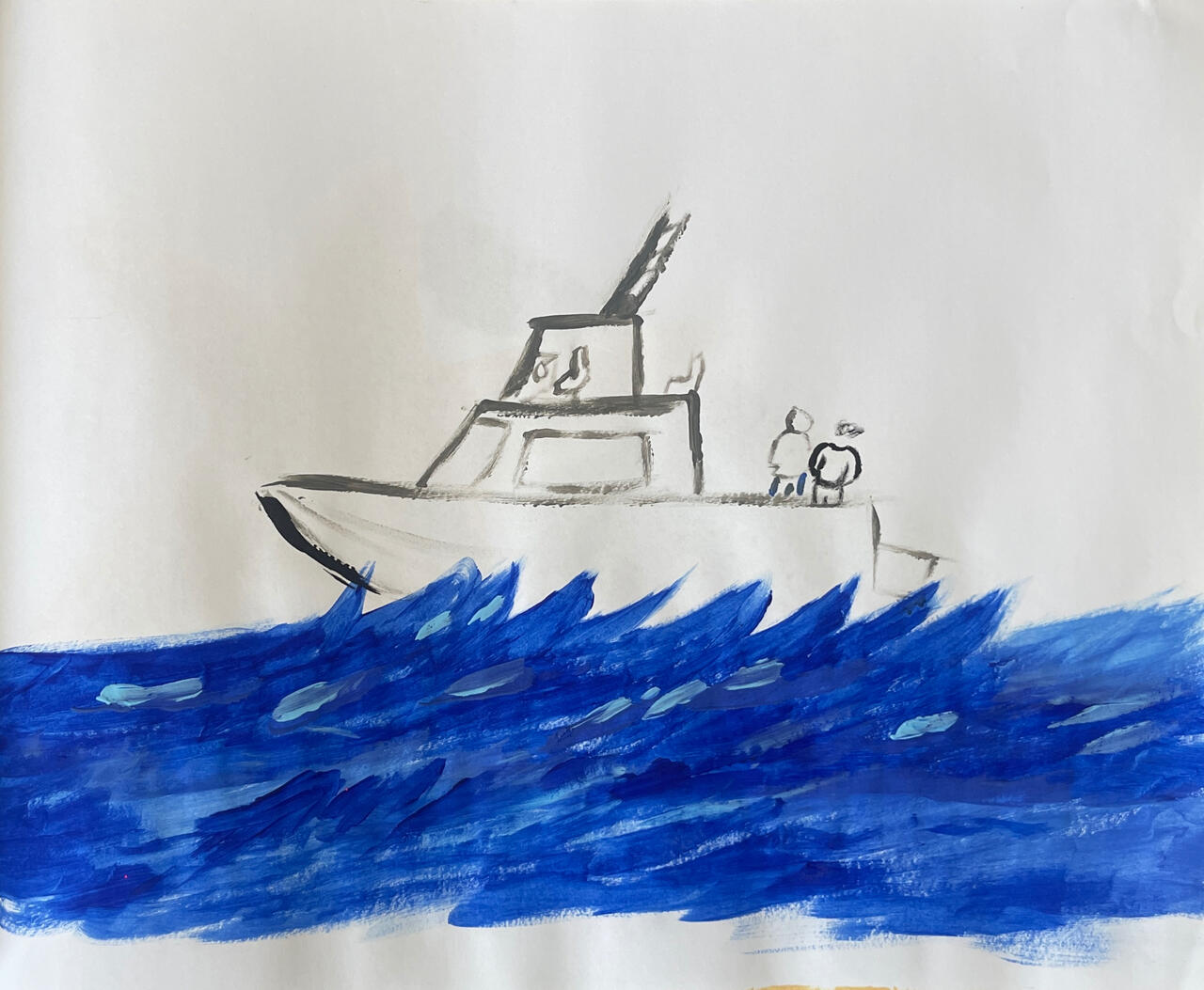
John
Acrylic on paper
Series III: Interrupted Visions
Cape Cod (from memory), 2025This painting captures a moment of quiet reverence between two men named John—one the artist, the other a chosen mentor who became a father figure through presence, principle, and care. The scene recalls a boat ride off the coast of Cape Cod, where John taught the artist how to fish—and more profoundly, how to move through transition with dignity.Though others were present that day, only two figures appear. It’s intentional. This is not about the boat or the trip—it’s about the bond. John is the one who offered spiritual grounding, practical support, and the kind of masculine tenderness that rarely gets honored. The one who said, If you walk away, I’ll cover your rent for six months. I’ve got you. And meant it.The brushstrokes are loose, the water alive, the figures simplified but unmistakably there. This is a portrait of love as stability. Of guidance as quiet presence.John is a tribute to chosen family—and to being seen when it mattered most.
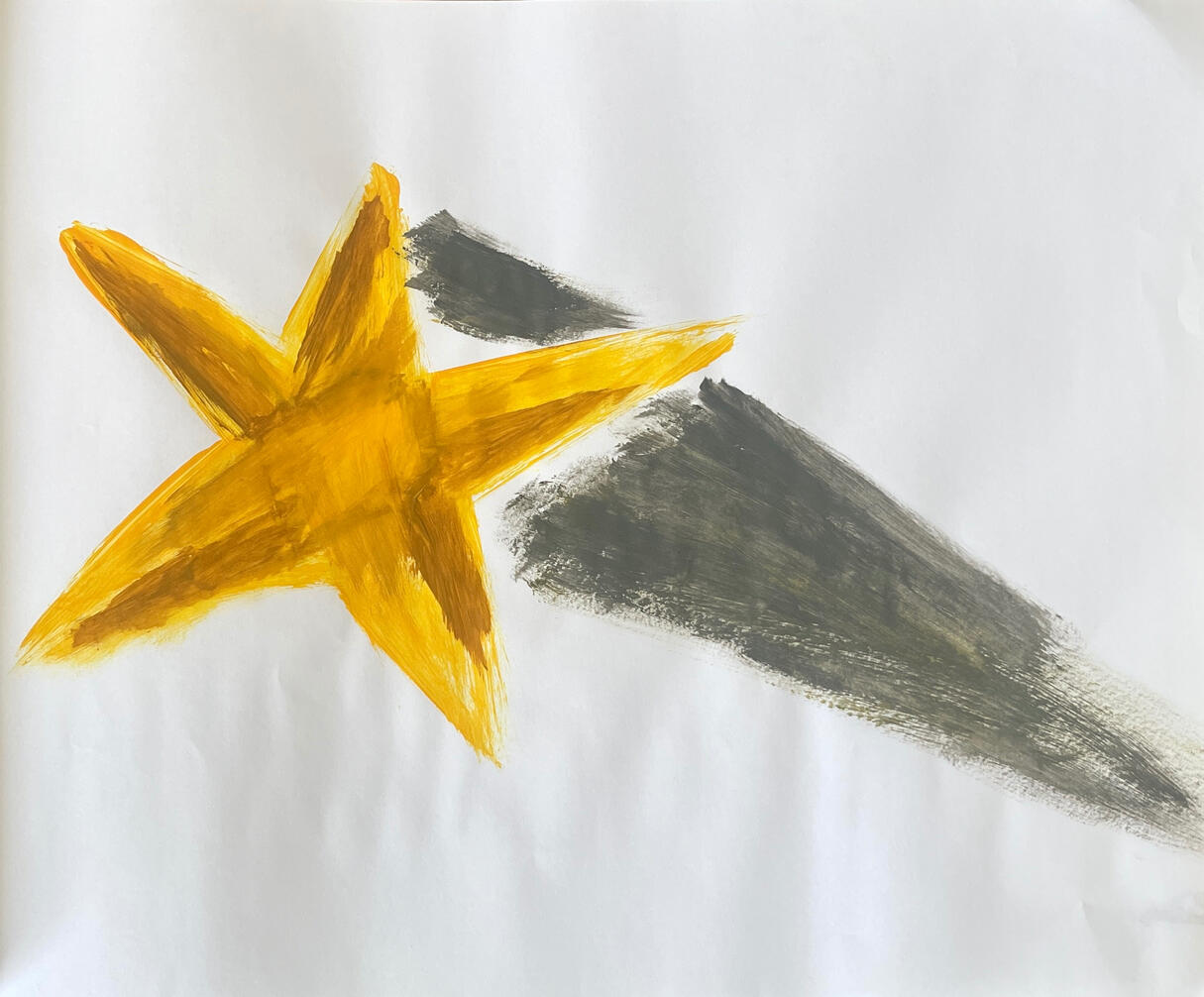
Star
Acrylic on paper
Series III: Interrupted Visions
Kingston, 2025There was no vision, no backstory—just a feeling. Star was painted in one clear motion: bold, immediate, and unapologetic. A burst of yellow-gold energy blazes across the page, angled and sharp, with a smoky trail stretching behind it like a memory, a movement, or a shadow refusing to be left behind.The work doesn’t explain itself—and doesn’t need to. It belongs to Series III, a body of work defined by spontaneity, redirection, and emotion before meaning. The star is imperfect. Alive. Tilted forward. It doesn’t just represent light—it’s reaching toward something.Star is what happens when instinct becomes the only guide. No justification. No revision. Just the act of painting as its own kind of clarity.
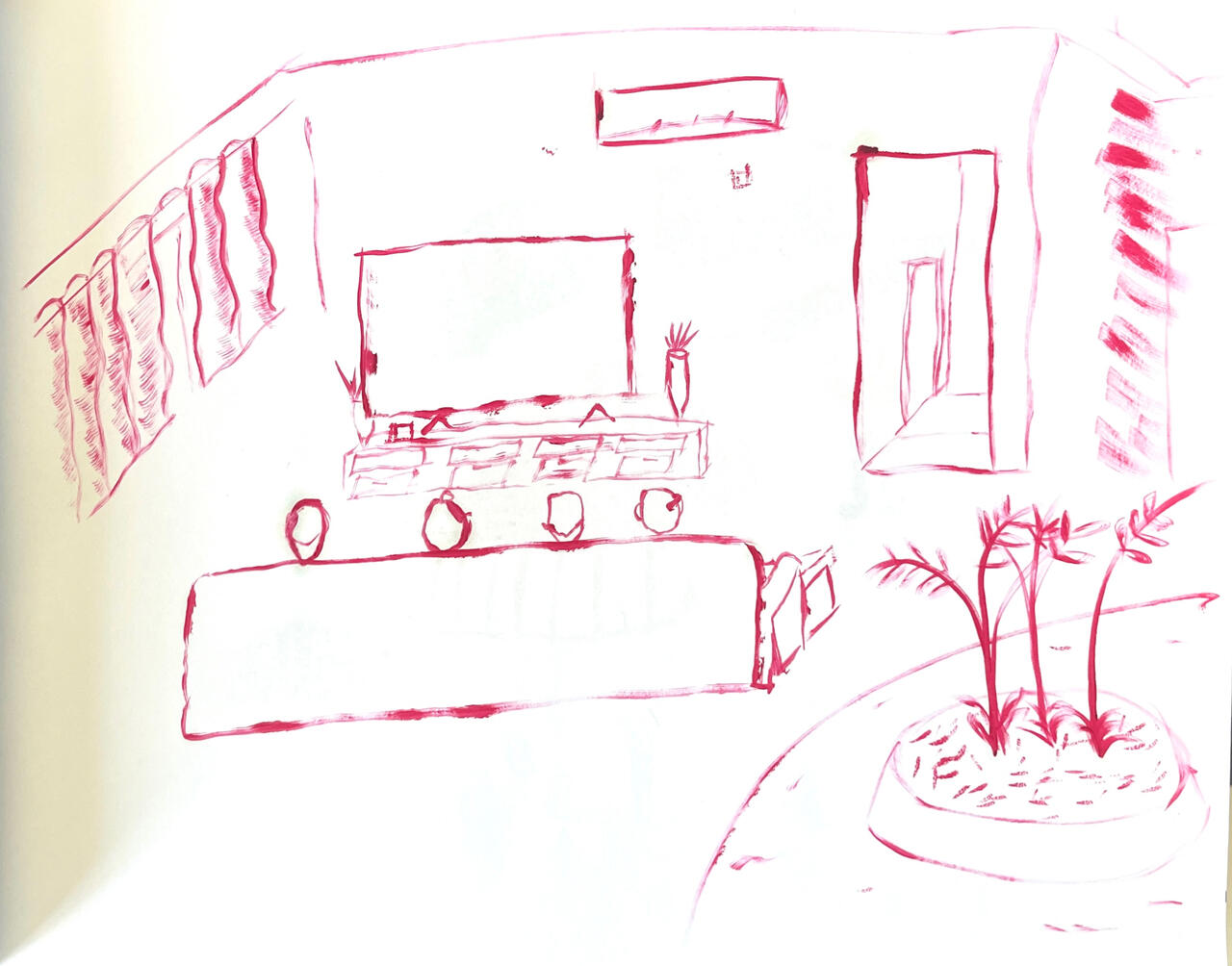
Games Night at Akeem’s
Oil on paper
Kingston, 2025Painted from memory in the days following a games night shared with Joel, Akeem, and Sarah, this oil sketch reflects not the rules or outcomes of the game, but the feeling of togetherness in pause. Set in Akeem’s high-rise condo, the piece gently floats above the scene: three friends drawn into a soft clinch on the couch, backs curved in shared focus, bodies intuitively aligned.The room is sparsely detailed yet deeply familiar—curtains softly pooled, an orchid placed precisely, entertainment console humming with quiet domesticity. A semi-circular planter with thin, reaching palms sits in the foreground like a breath—a natural counterpoint to the clean architectural lines and the hush of the air conditioning unit above.What emerges is a study in rhythm: the harmony of stillness and nearness, the dance between sparse detail and lived memory. Like a late sonata played in a private room, the painting invites viewers not into spectacle, but into something subtler: the comfort of presence, the grace of ordinary joy.
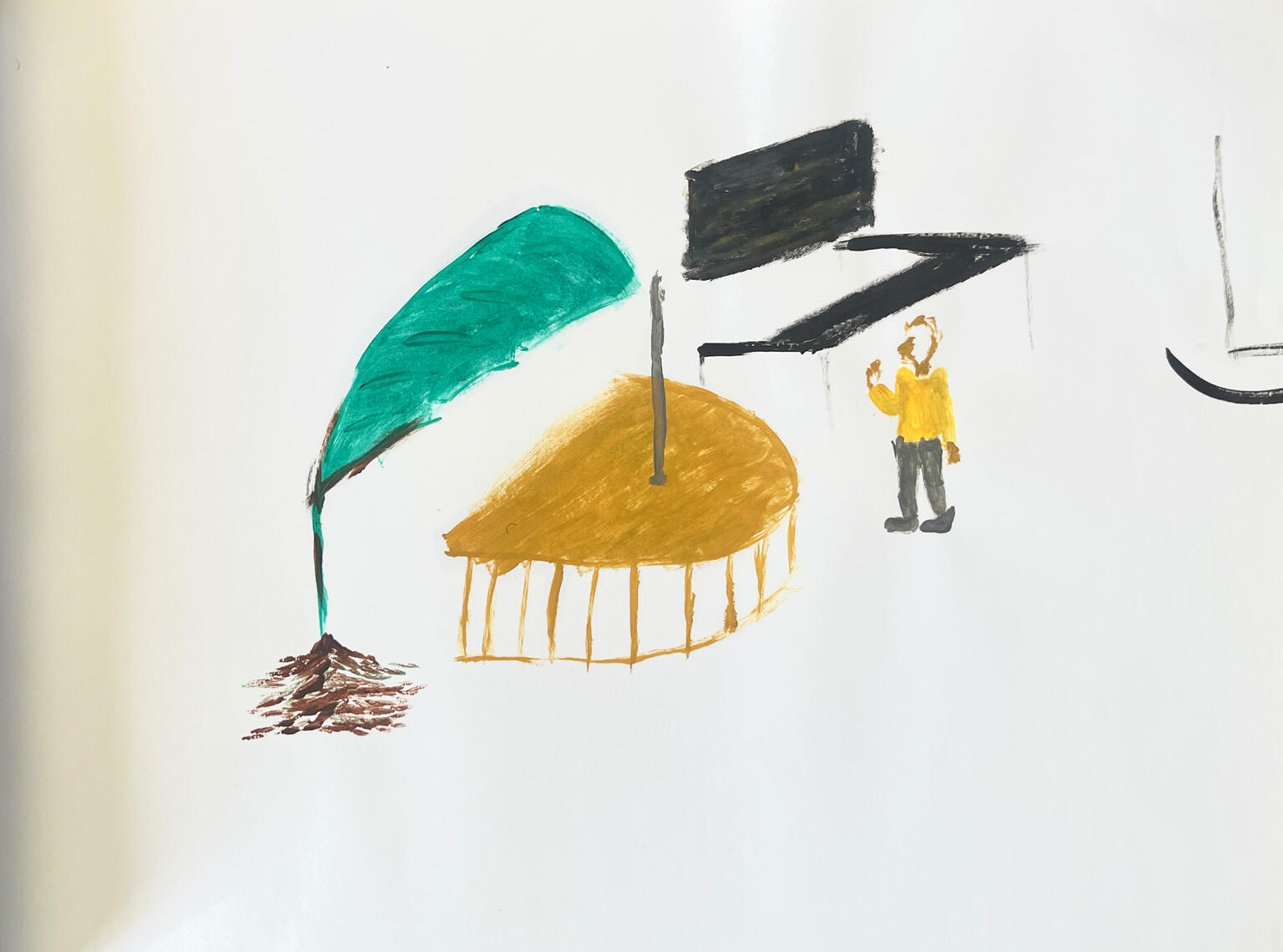
Club?
Acrylic and oil on sketch paper
Kingston, 2025This work began with a banana tree. Painted first from the artist’s yard, the bold green leaf descends like a quill or a thought, grounding the composition in something familiar, something living. But restlessness followed. In search of inspiration and peace, the artist took a walk and wandered, unexpectedly, into a strip club—quiet for the night, repurposed into a karaoke lounge.What followed was a quiet moment of witnessing. A man stood on stage—represented here as an amber platform crowned with a silver pole—singing freely under the glow of a black TV screen suspended above the bar. His figure, rendered in yellow, is neither caricatured nor detailed, but tenderly suggested. In this moment of unscripted vulnerability, the singer let go—immersed, unguarded, whole.Club? captures the strange holiness of that experience. Nature and neon, plant and performance, solitude and song—all live side by side in a composition that feels at once spontaneous and sacred. The banana leaf, first to arrive on the page, becomes an emblem of rootedness. The stage becomes a site of transformation. And the painting, like the moment it records, offers no spectacle—only peace.
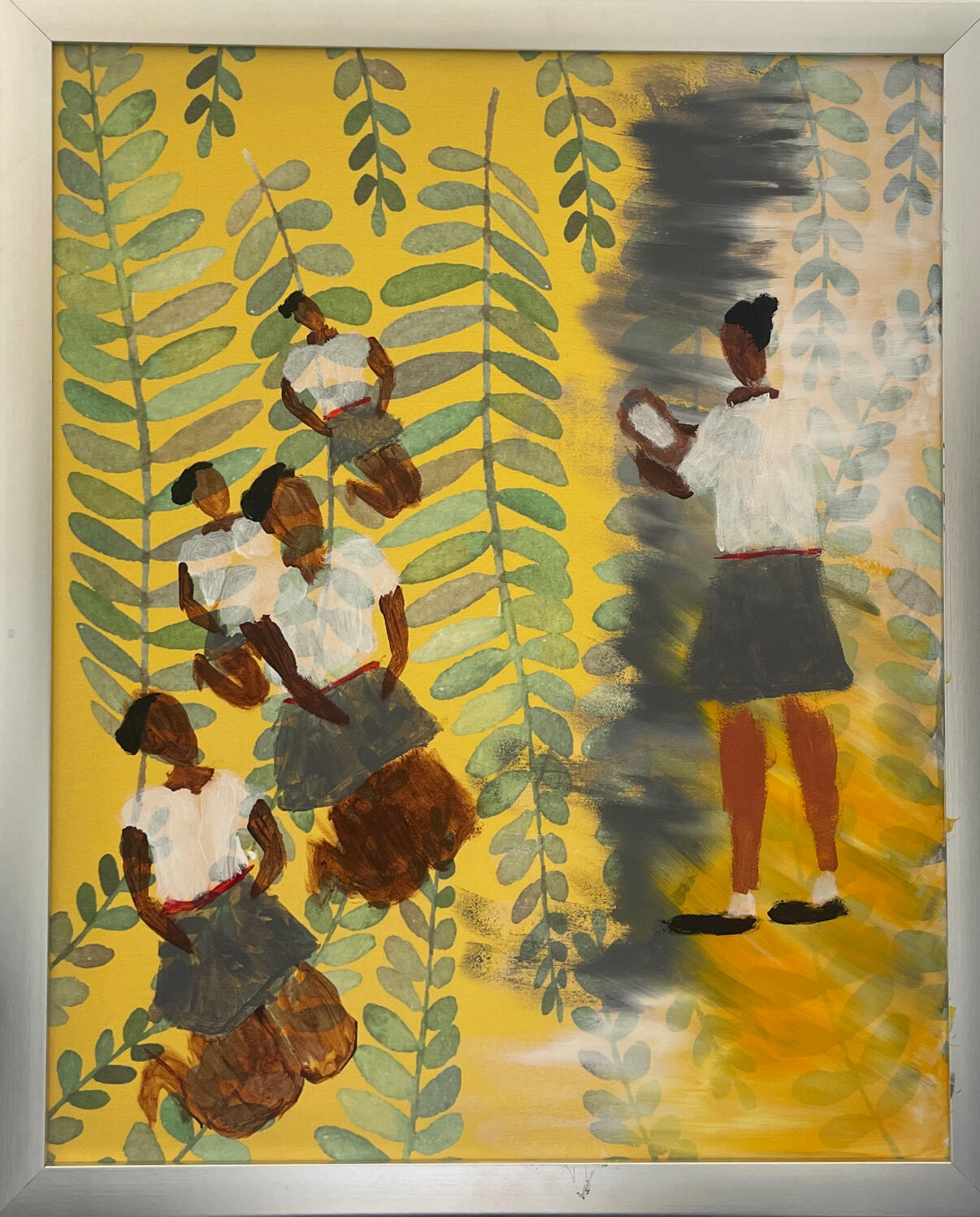
Schoolgirl
Acrylic on recycled canvas (pre-printed frond pattern)
Series III: Interrupted Visions
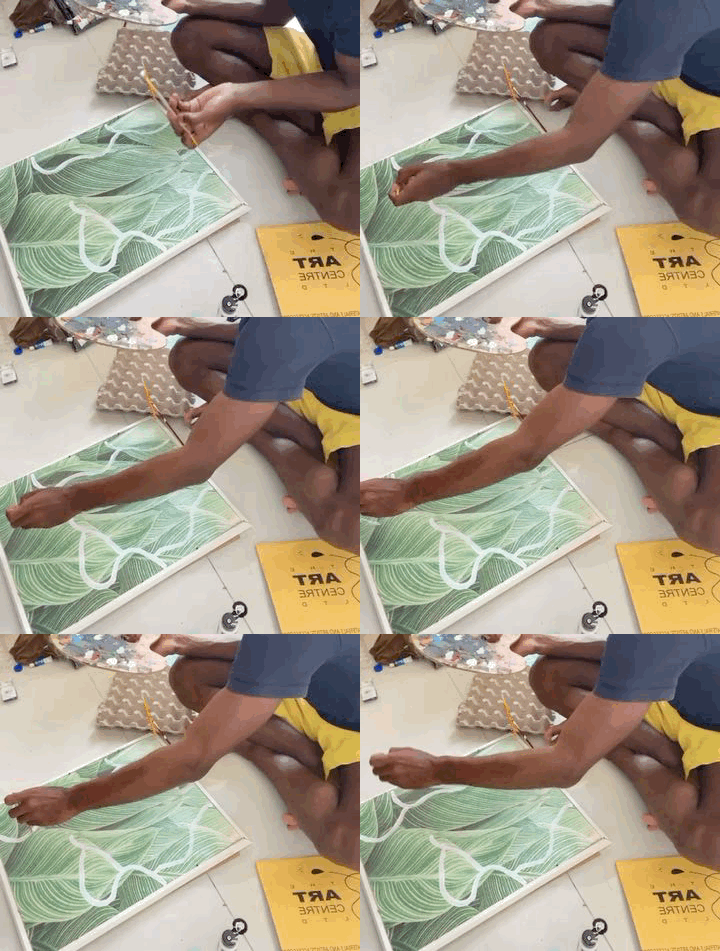
Kingston, 2025Schoolgirl began as an attempt at a gradient—but the painting had other plans. Working on a recycled canvas printed with a repeating frond pattern, the artist layered his own vision atop the fabric: one schoolgirl, upright with a clipboard, faces six others who kneel in silence. Their uniforms are identical—white blouse, grey skirt, hair pulled into buns. But one stands. The rest submit.Painted in intuitive strokes, the figures are faceless yet heavy with meaning. The unfinished blend on the right side of the piece remains—evidence of a shift. The gradient was abandoned. The story had arrived.By incorporating the canvas’s inherited pattern rather than covering it, the artist leans into the tension between structure and spontaneity. The result evokes artists like Yu Nishimura, but remains uniquely personal—a meditation on girlhood, power, repetition, and the quiet question of why this image, now?Schoolgirl marks the beginning of Series III: a space where visions interrupt plans, and beauty is found in what we allow to surface.
Series II - Gradient Works
Series II marks a turning point—a shift inward.Each piece in this series begins with a felt image: sometimes seen in dreams, sometimes arriving as color without form. Gradients serve as more than a visual device here—they are a method of transmission. A way of documenting a mood, a whisper, a presence. These paintings don’t shout. They expand. They emanate. They ask the viewer to lean in, to sit still, and to feel the slow transitions of color, energy, and emotion.Often built on recycled canvases and improvised materials, these works resist perfection in favor of spiritual accuracy. Some were painted in silence. Some alongside conversation. All were created in moments when the artist said yes to the quiet nudge to begin—even without knowing why.In Series II, color is memory. Light is guidance. And painting becomes a form of listening.
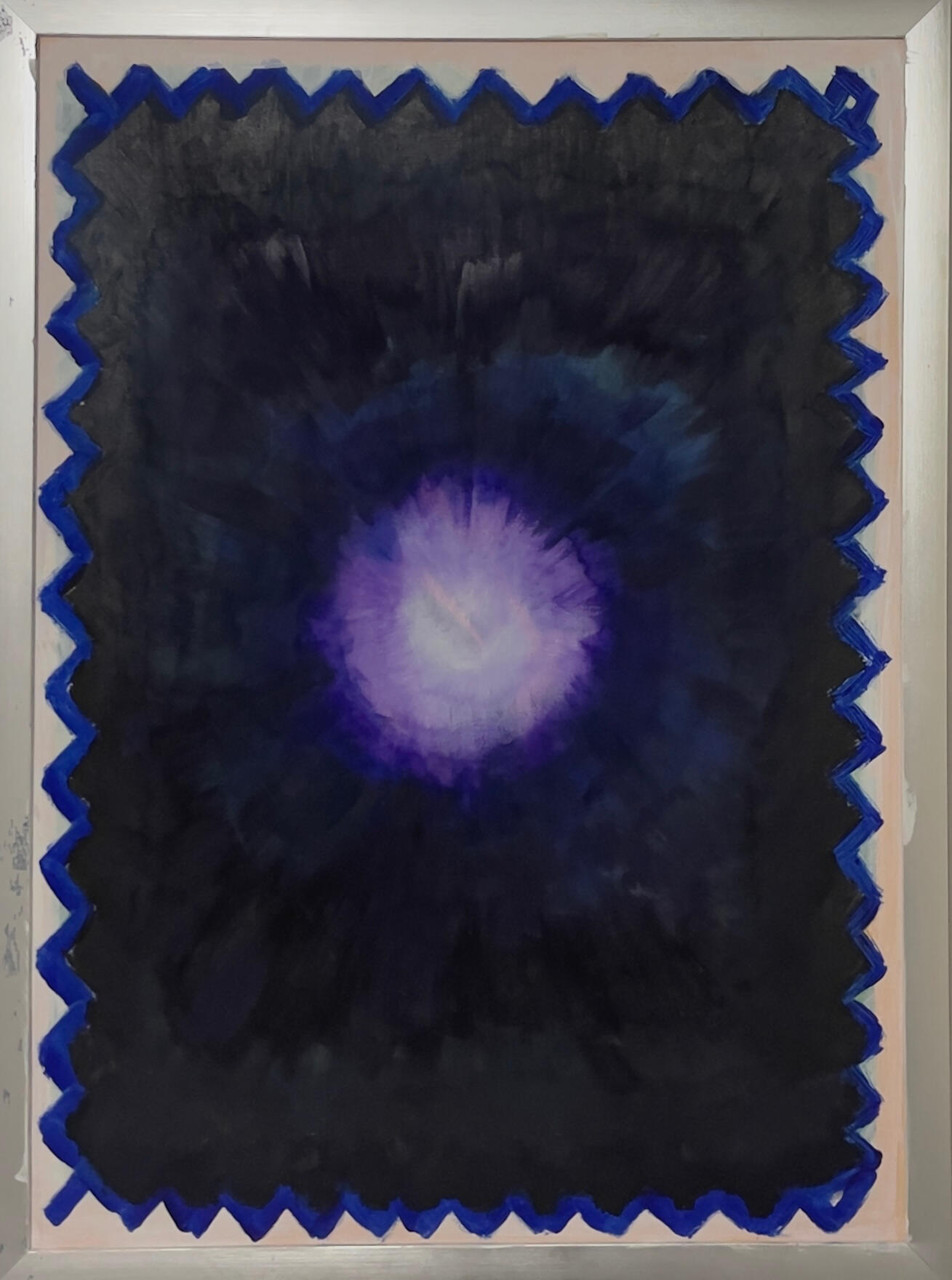
Violet (for Grandma)
Acrylic on recycled canvas, framed
Series II: Gradient Works
Kingston, 2025This piece began with a vision—dark, jewel-toned, and vivid enough to follow the artist through sleep. At first, there was no plan, only a felt insistence: “Fine. I’ll paint it.” Using a recycled canvas from a stranger who had moved to England, the work began with jagged, gem-like borders—a substitute for the emerald encrusting that lived in the artist’s mind’s eye.The center radiates violet light, surrounded by deep washes of blue, black, and navy—its gradient pulse growing inwards and outwards at once. At first, the color was chosen intuitively. But as the painting neared completion, something strange unfolded: while recording a video to describe the piece, the artist casually mentioned, “I’m using violet now—which is a coincidence… that was my late grandmother’s name.”Ten minutes later, a call from his aunt. The conversation was unusually warm, unusually long—and ended with the reveal: it was the exact two-year anniversary of Grandma Violet’s passing. Unprompted. Unremembered. Unmistakable.What began as an experiment in gradient and form became a spiritual transmission. Violet (for Grandma) is less about grief than presence. Less about the past than the way memory, spirit, and art can meet us in the present—unannounced, but unmistakably here.
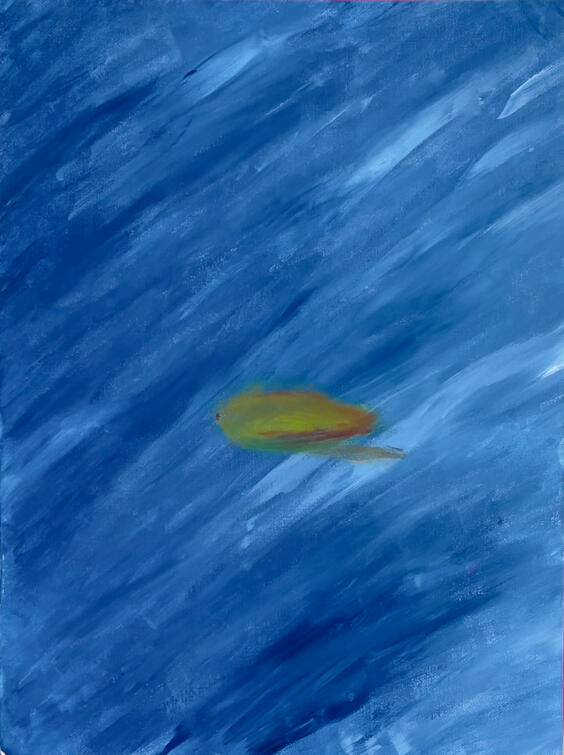
Mango
Acrylic on canvas
Series II: Gradient Works
Kingston, 2025This piece honors a single fruit—and an entire season of survival.Painted months after a life-changing return to Jamaica, Mango is a minimalist work born from abundance, simplicity, and quiet reverence. The blue gradient, completed first, evokes sky, sea, stillness, and surrender. At its center: a lone mango, painted after the artist witnessed one fall freshly from the tree—a moment that called to be immortalized.The mango is not merely an object here; it is a provider, a protector. During a disorienting phase marked by financial uncertainty, spiritual seeking, and the emotional weight of rebuilding a life post-corporate burnout, the artist found solace in nature’s quiet, consistent offering. Two trees—one bearing Julie mangoes—fed him daily. There was no fridge, no income, and yet: each day, without fail, fruit fell. Bruised or perfect, each one was received.This painting, made in retrospect from a place of relative stability, is a thank you. A testament to the divine rhythm of provision. A reminder that when everything else is uncertain, the earth still gives.
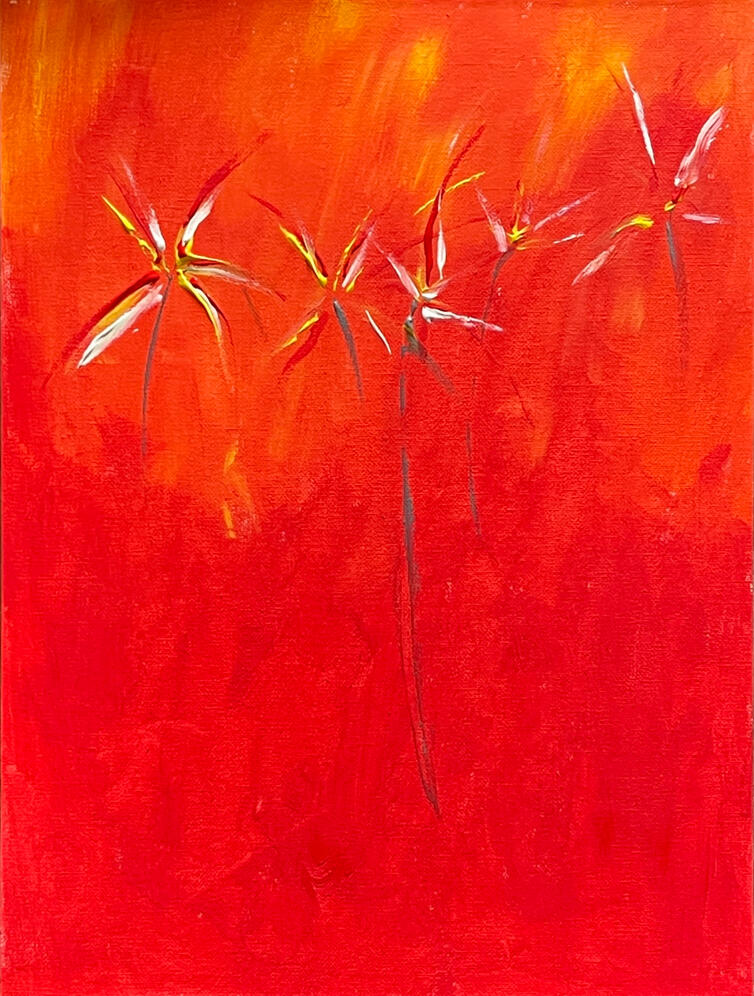
Fireworks
Acrylic on canvas
Series II: Gradient Works
Kingston, 2024Fireworks marks the beginning. It was the first time the artist covered an entire canvas—an act that symbolized both commitment and authority. Painted shortly after a long-overdue reconciliation with his brother, the work captures a moment of personal clarity: peace was not only possible—it was celebratory.Set against a radiant background of red and orange, bursts of light stretch upward and outward like praise, like declarations. Each stroke suggests ignition: of emotion, of family healing, of artistic freedom. This was the first piece where the artist allowed his hands to lead fully, guided by a newfound spiritual conviction. A sermon reminder—we are rulers of a kingdom—resonated in his mind, not as dogma, but as invitation: to take authority on the canvas.Fireworks is not just about color and form; it’s about permission. To celebrate boldly. To feel joy without shame. To begin.
Series I
Series I: Surrendered Line is a body of work about permission. The permission to be imperfect. To feel deeply. To paint without training, without a plan, without a single reason other than: because I want to. It is the artist’s first public confrontation with the canvas—born from years of restraint inside corporate ladders, academic systems, and quiet survival.The title comes from what each work has in common: the line that surrenders. Sometimes it’s literal—a curved brushstroke, a written word. Sometimes it’s emotional—a moment of grief, of desire, of self-recognition. These are paintings made not to perform, but to let go. To ask: What happens if I stop worrying what others will think? And then to answer with color.Across the series, we see a wide and courageous range:
• The meditative purity of First Stroke.
• The deep, spiritual quiet of Father.
• The intimate confidence of Body.
• The unapologetic truth-telling of Most Worries Are in My Head and I Crave Excitement.
• The imagined joy of Jewel Grande, drawn with the freedom of a child—and the clarity of an adult who has reclaimed wonder.In this collection, nothing begs for approval. Every piece is enough, because the act of painting it was enough.This is not a “beginner’s” series. It is an origin story. One rooted in honesty, inheritance, and a brush that finally found its hand.
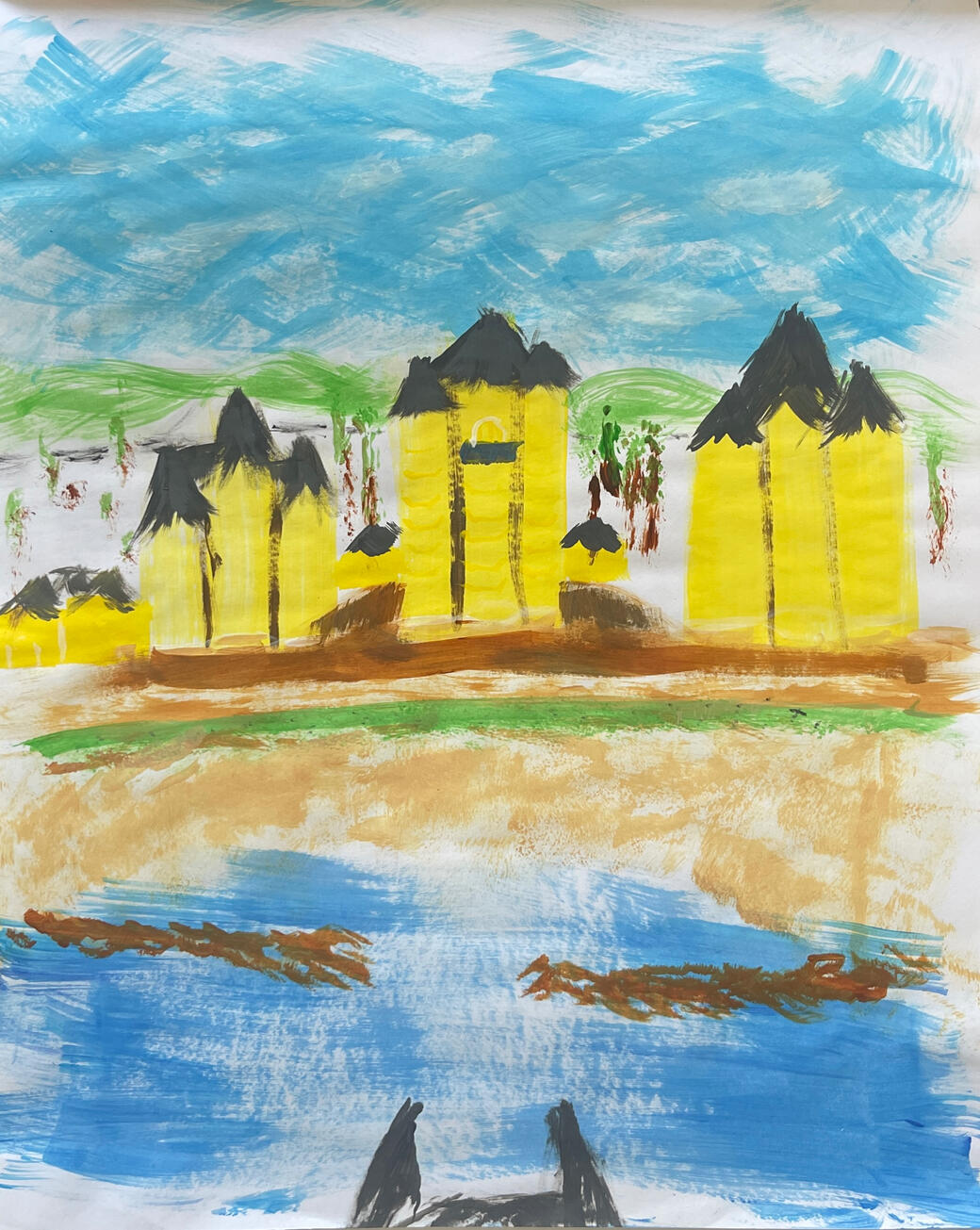
Jewel Grande
Acrylic on paper
Series I: Surrendered Line
Montego Bay (from memory), 2025Painted from the deck of a sailboat, Jewel Grande captures more than a view—it captures a feeling. The artist, moved by the beauty and luxury of his favorite resort, let his hand roam freely over the page, using sketch paper not for practice—but for presence. The work glows with unapologetic color: sunny yellow towers, a wide horizon, calm blue water. Centered is a single dream—a grey balcony marking the artist’s imagined penthouse.More than architectural memory, this painting is about childlike freedom. The kind that says, I don’t need permission to dream this big. It honors the joy of beauty, the power of play, and the clarity that comes when we let go of how we’re supposed to paint.In a series about surrendering control, Jewel Grande is a moment of openness—where fantasy becomes fact, and the future feels close enough to touch.
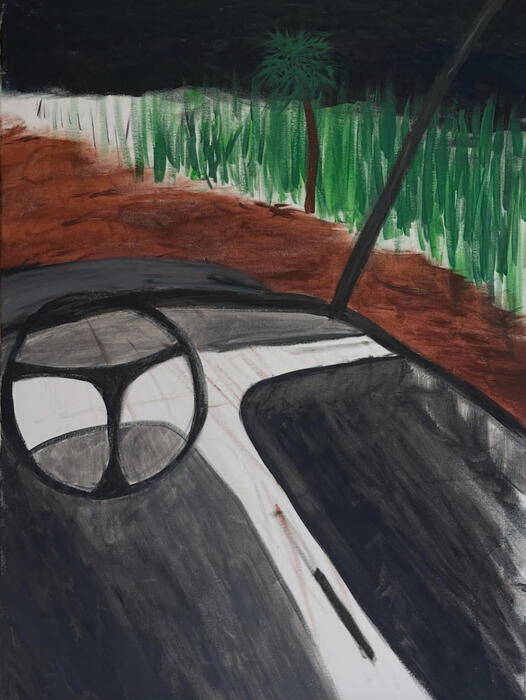
Mexico
Acrylic on canvas (2 ft tall)
Series I: Surrendered Line
Kingston, 2025Painted shortly after returning from a celebratory trip to Mexico, Buggy Ride captures a moment of pure motion and memory. The artist revisits the experience from his own perspective—seated in a dune buggy, surrounded by red dirt, wind-whipped grass, and the thrill of movement. The brushwork is gestural and bold, as if trying to preserve the joy before it fades.This piece is part of the artist’s ongoing reflection on Black boy luxury—adventure, freedom, and joy as acts of resistance and reclamation. The steering wheel dominates the foreground, placing the viewer in the driver’s seat, reminding us: this story is mine to tell.There’s no polished glamour here—only sun, soil, and velocity. The palm tree in the distance, the rising green stalks, and the darkening sky suggest both escape and return. It’s not about spectacle. It’s about presence.Buggy Ride is a memory turned monument.
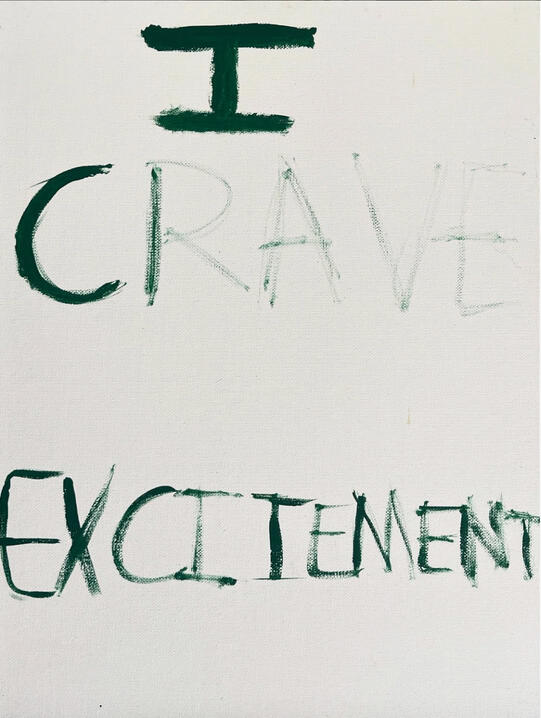
I Crave Excitement
Acrylic on canvas
Series I: Surrendered Line
Kingston, 2025Painted during a creative surge of truth-telling, I Crave Excitement is both confession and compass. The phrase is written boldly, but unevenly—each word forming as if mid-thought, mid-breath, part declaration, part vulnerability.There’s no decoration here. No masking. Just green acrylic on raw canvas. Some letters are fully formed; others remain traces, outlines, suggestions. That contrast is the point. The artist doesn’t pretend to have fully arrived at the feeling—he simply knows he wants it. Craves it.Painted in the same stretch as Most Worries Are in My Head, this work reflects a deep hunger not just for stimulation, but for aliveness. For color, for spontaneity, for risk. For art that moves the spirit as much as the brush.I Crave Excitement is a pulse on canvas. A need spoken out loud. A refusal to live half-asleep.
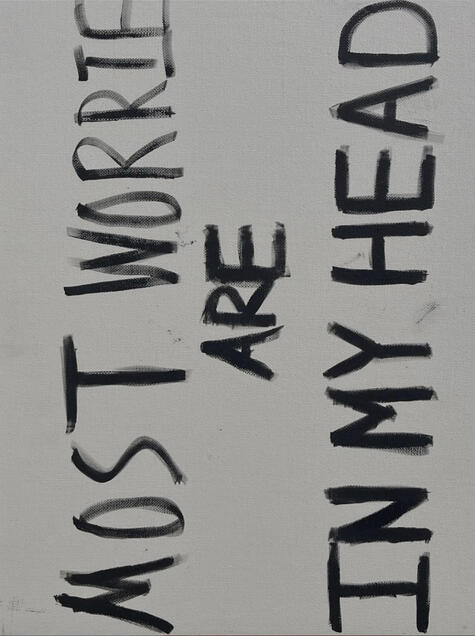
Most Worries Are in My Head
Acrylic on canvas
Series I: Surrendered Line
Kingston, 2025This painting marks a creative breakthrough. After years of navigating academia, corporate success, and entrepreneurship, the artist found freedom in five imperfect words: Most worries are in my head.The lettering is urgent and intuitive, painted without overthinking. The final “S” doesn’t fit the canvas, and that’s the point. In that moment, the artist realized even that—a cropped letter, a flawed alignment—was just another imagined problem. What mattered was the release. The truth.This work isn’t just an affirmation—it’s a dare.The artist challenges everyone who stands before it:
What would you create, if you stopped worrying who would judge it?Most Worries Are in My Head is a turning point. The moment the artist stopped editing himself, and started living on the canvas.
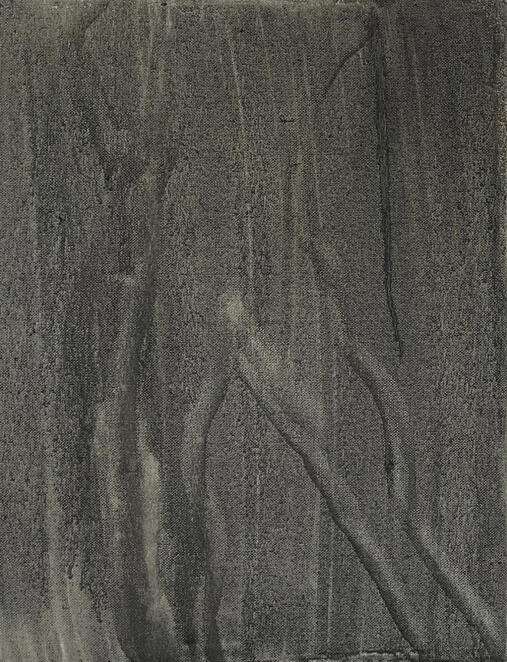
Body
Diluted oil on canvas board (originally intended as watercolor)
Series I: Surrendered Line
Kingston, 2025Painted shortly after reconciling with his brother Jeromy, Body captures a quiet moment of self-seeing. One night, alone and in his Calvins, the artist noticed his shadow—sensual, soft, striking—and held the image in memory. What followed was not a portrait, but a presence.Though the artist had intended to use watercolor, he accidentally diluted oil paint, resulting in a medium that moves like water but settles like skin. The textures are vertical and fluid, evoking the rhythm of light across a torso, the curve of a hip, the ease of standing without shame.In the background of this work is a sense of emotional safety—of being witnessed and still feeling whole. It was created during a period of restored connection, when the artist was beginning to return to himself not just in form, but in family.Body is not about performance. It’s about return. The kind of quiet confidence that follows healing.
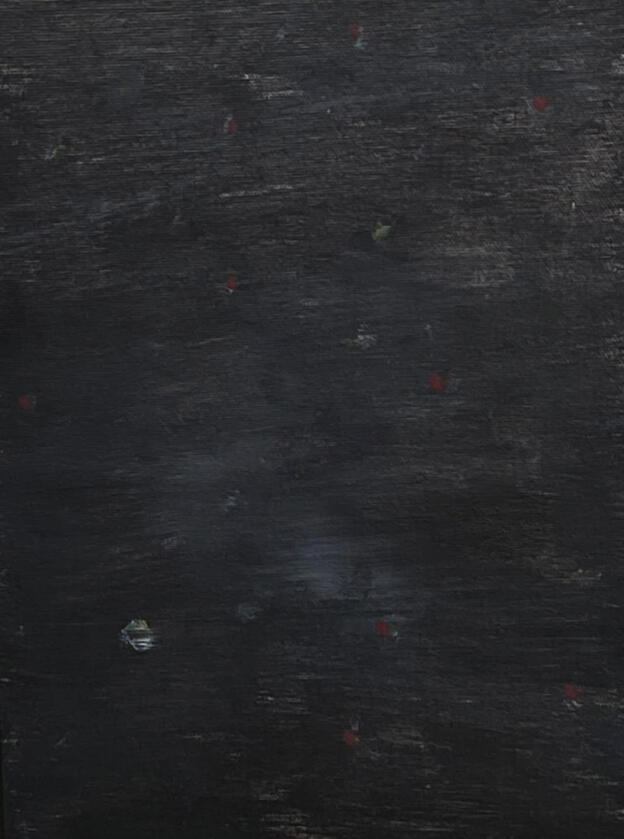
Father
Acrylic on canvas
Series I: Surrendered Line
Kingston, 2025Father began as a vision: a foggy white glow emerging from the center of a dark sky, scattered with small points of red and yellow light. It was intended as a night scene, but it became something more—something felt, not fully understood at the time.Painted during a period of emotional weight, the artist was quietly navigating grief, creative uncertainty, and the slow process of returning to himself. The dots of color refract across the canvas like stars, but also like moments—brief, burning, gone. The black field holds them all in suspension. In the absence of form, the atmosphere becomes the message.The title, Father, revealed itself later. The artist’s own father had passed, and though the painting makes no literal reference to him, his presence is everywhere—in the stillness, in the center glow, in the quiet decision to create through the dark.Father is not an elegy. It is not a goodbye. It is a recognition: that even in silence, something—someone—remains.
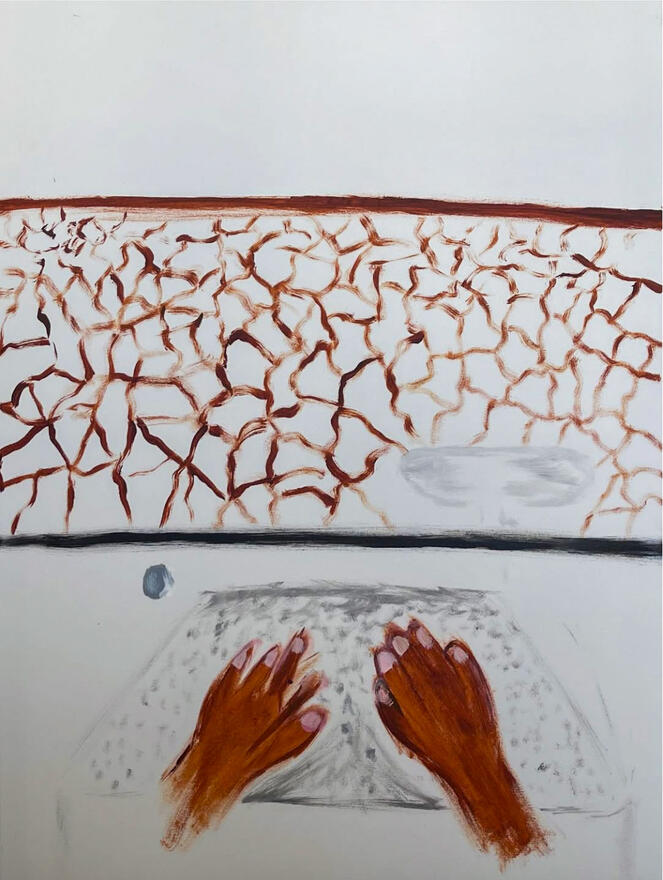
ItineraryAcrylic on stretched canvas
Series I: Surrendered Line
Kingston, 2025Painted from memory after a quiet moment of luxury, Itinerary captures a personal ritual frozen in time: the artist, seated alone in a spa, receiving a manicure in anticipation of an upcoming trip. His hands are the centerpiece—brown, poised, with one finger lifted mid-conversation—evoking care, composure, and the dignity of attention.The background, a striking network of root-like patterns, is a visual recollection of the spa’s divider: tree branches suspended in acrylic, forming natural honeycomb shapes. What the artist remembered wasn’t just the room, but the feeling—of being cared for, of preparing for a journey, of finally having space to breathe again.Named Itinerary to reflect both the literal travel that was approaching—a wedding in Mexico—and the emotional journey of arrival, this was the artist’s third painting and first large stretched canvas. Though the nail technician is unseen, their presence is felt through absence. What remains is the artist’s body, unguarded and worthy.In a world where Black men are rarely shown in moments of softness, the artist flips that narrative on its head. Itinerary quietly insists: presence is enough. Care is deserved. Beauty belongs.
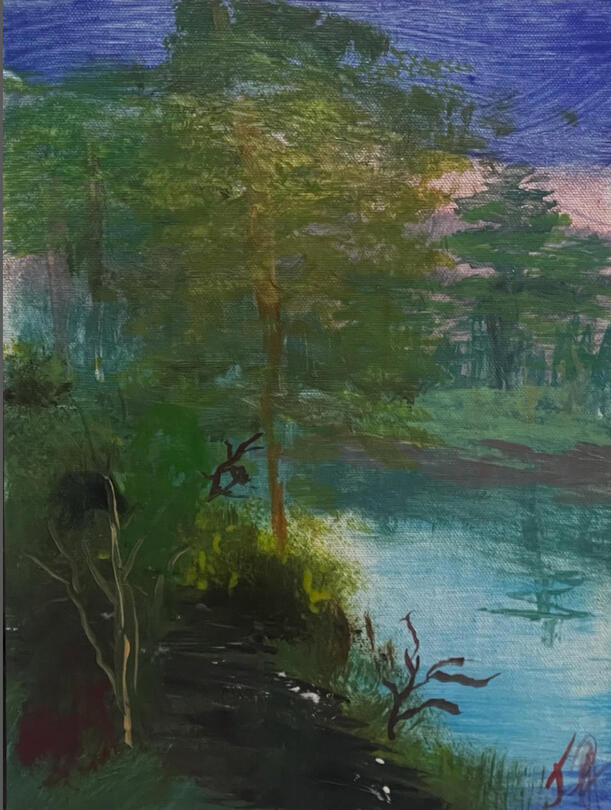
Perfectionist
Acrylic on canvas
Series I: Surrendered Line
Kingston, 2024This is the artist proving a point.Following the raw spontaneity of his first line-based work, Perfectionist was created through the lens of precision and proof. Painted while following a Bob Ross-style tutorial, the piece leans into naturalism: textured trees, reflections in water, a careful layering of light and shadow. But beneath the idyllic forest lies a different motivation—a quiet defiance.With this work, the artist silenced the voice of doubt. The one that says, You’re not a real painter unless you can paint realism. Perfectionist answers with skill. But more importantly, it ends the conversation. The artist, having proven his technical capacity, would now move forward on his own terms. No longer painting for approval—but from intuition.This is the moment he said: Yes, I am an artist. And yes, I choose my own voice.